Man, let me tell you. I know this sounds simple, right? “The size of a Pokémon card.” You just Google it, buy a sleeve, and move on. That’s what I thought, too. And that’s where I screwed up big time, and why I ended up pulling out my precision tools and spending a solid afternoon getting the real numbers.
I got fed up. I really did. Every single time I tried to buy card protectors—sleeves, top-loaders, graded card cases—it was a gamble. You see “Standard Size TCG Card” on the box, which should be fine. But then you slide your card in, and either it’s swimming around like a small fish in a big pond, or it’s so snug you have to force it, and you feel that terrifying little bend as it goes down. And if you’re double-sleeving? Forget about it. It’s a complete nightmare. I’ve bought three different packs of “Japanese size” or “Standard size” only to find they were all slightly off. It’s like every manufacturer just eyeballs it.
The Decision to Stop Guessing
I had a specific project I was working on. It wasn’t just about sleeving. I was designing and 3D printing custom insert trays for my storage box, which needed millimeter-perfect tolerance if I wanted everything to look clean and professional, not janky. When I tried to find the exact dimensions online, I got five different answers. Some dude said 63x88mm. Another guy swore it was 64x89mm. Someone else just listed the size of the sleeves they used, which is useless because the sleeve is always slightly bigger than the card.
That’s when I went nuts. I said, enough is enough. I’m going to measure it myself, and I’m going to use the proper gear. No ruler, no tape measure. I dug out my digital calipers. If you haven’t used one, it’s a fantastic little tool. It measures down to the hundredth of a millimeter. That’s how we were going to get this done.
The Measuring Gauntlet
The process was simple but had to be dead accurate. I grabbed three different cards from three different eras to check for any weird inconsistencies in the printing process over the years. I picked:
- An old-school Base Set common (Wartortle, I think).
- A mid-era EX card (just some random Vulpix).
- A super-new VMAX card (a big chunky one).
I knew the card stock could vary a tiny bit, but the actual dimensions should be the same across the board. The goal was to find the average and the most precise measurement that held up across all three.
Step 1: Measuring the Width.
I clamped the jaws of the caliper gently but firmly on the side edges of the first card. I had to make sure the card was perfectly straight against the jaws. I measured three points along the width: top, middle, and bottom. Then I logged the number. I repeated this for the other two cards. They were all consistently close, but one number kept popping up the most often.
Step 2: Measuring the Height.
Same deal. Clamp it top to bottom. Three points. Log the number. This one was actually a bit easier to get consistent readings on. It seems like the height cut is super precise.
Step 3: Measuring the Thickness (Bonus Round).
This is crucial if you are sleeving! I measured the card by itself first. Then I measured it with one perfect-fit sleeve. Then I measured it with two sleeves (a perfect-fit plus a standard outer sleeve). This thickness number is what people always forget, and it’s why double-sleeved cards sometimes won’t fit in top-loaders or display slots.
The Big Reveal and Why I Bothered
After about forty-five minutes of messing around, logging the numbers, cleaning the cards to make sure no dust was adding fake bulk, and re-measuring, I finally hammered down the exact dimensions of a standard Pokémon TCG card. And here it is, the number that actually matters:
Width: 63.5 mm
Height: 88.9 mm
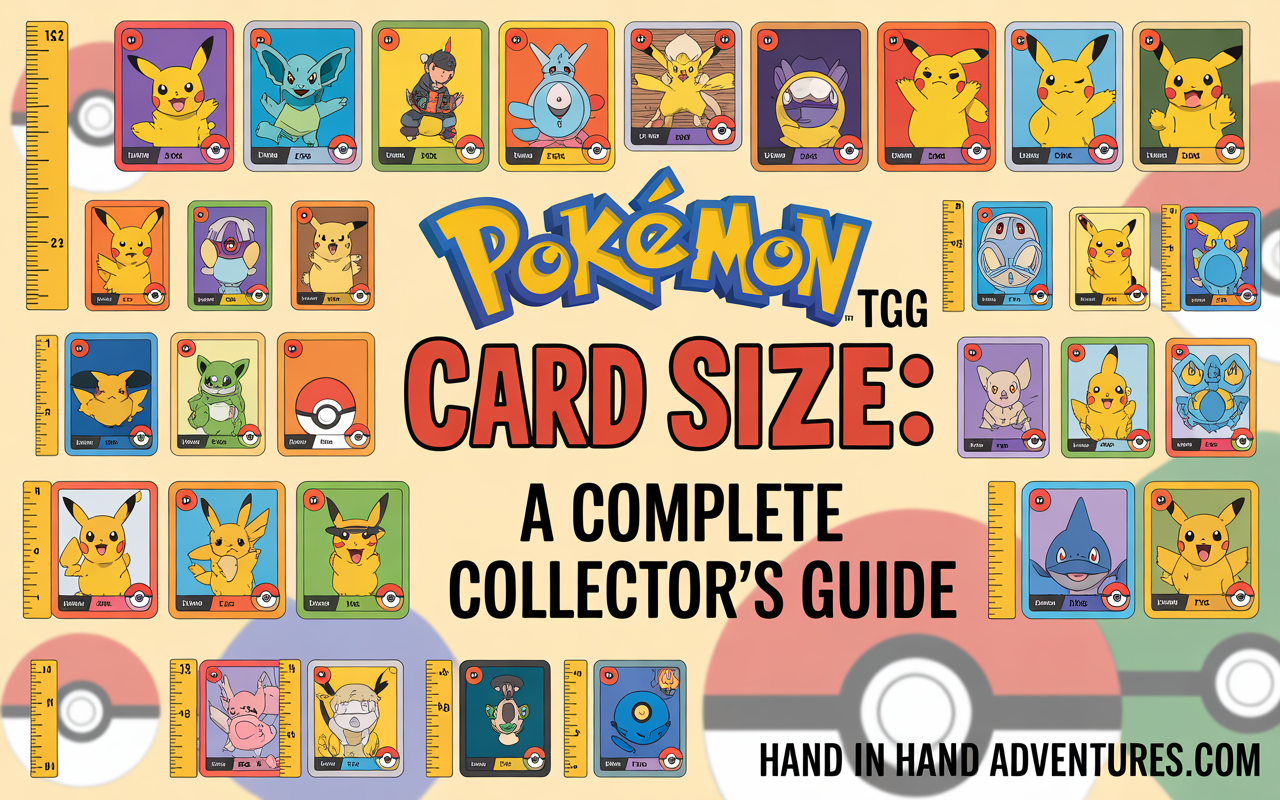
That’s what you need to remember. 63.5mm x 88.9mm. It converts to 2.5 inches by 3.5 inches, but if you’re using sleeves or making custom stuff, you need those millimeters. When you see a pack of sleeves that says 63x88mm, that’s why it feels too tight! You need that extra half millimeter on the width and the full nine-tenths of a millimeter on the height for a smooth fit.
Why do I know all this? Why did I go through this ridiculous exercise? It goes back to when I got serious about collecting that new Charizard VSTAR card. The market went absolutely bonkers for it, and I lucked into getting a perfectly centered one. My son (who started me back on this collecting path after years away) saw it and freaked out. It was a card worth a few hundred bucks, and it needed to be perfectly protected. I didn’t want the risk. I bought a pack of cheap sleeves that claimed to be “standard size” and watched in slow-motion horror as the top edge of the card got caught on the sleeve’s seam while I was inserting it. It didn’t damage the card, but it scared the living daylights out of me.
I realized I couldn’t trust the marketing claims. I couldn’t rely on some forum post that was probably written by a guy who used a rusty ruler. When the stakes are high—whether it’s a high-value card or a custom display for someone you care about—you have to get your hands dirty and measure it yourself. Now I use these exact measurements for everything I buy and design. No more guessing. No more accidental bending. You’re welcome.